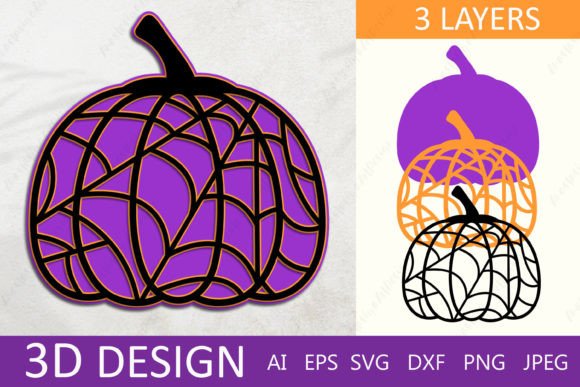
Reviewing the 3D Layered Halloween Pumpkin SVG for Embroidery
As a designer who has spent countless hours digitizing and testing files for real-world production, I approach every new 3d Layered Halloween Pumpkin Svg with a mix of curiosity and caution. We have all seen those flat, generic pumpkin outlines that look fine on a screen but disappear into a blob of orange thread once stitched out. The promise of "layered" design in the context of embroidery usually implies depth, dimension, and a more sophisticated visual hierarchy. But does this specific asset deliver on that promise when it moves from a digital Graphics file to a tangible Crafts project? I put this design through its paces to see if it holds up under the needle.
First Impressions: Mood and Visual Personality
The immediate appeal of the 3d Layered Halloween Pumpkin Svg lies in its structural complexity. Unlike standard silhouettes, this design utilizes overlapping shapes to mimic the natural ridges and shadows of a real pumpkin. For an embroidery designer, this is crucial because it allows us to play with thread texture and color variation rather than relying on a single flat fill. The mood is festive yet refined, avoiding the cartoonish trap that many holiday designs fall into. It feels appropriate for a boutique setting, suggesting that the final finished product will have a higher perceived value than a mass-produced item.
When I first loaded the file into my editing software, I looked closely at the separation between layers. In embroidery, we cannot simply stack vectors; we must manage stitch order and pull compensation. This design’s layout suggests it was created with an awareness of how threads interact. The layers are distinct enough to allow for different thread colors or stitch types, such as using a satin stitch for highlights and a fill stitch for the main body, creating genuine physical depth on the fabric.
Real-World Application: From Digital File to Handmade Product
To truly evaluate a machine embroidery design, you must imagine it on actual goods. I visualized this pumpkin on a heavy-weight canvas tote bag design. The layered effect works beautifully here because the sturdy fabric supports the density of the stitches without puckering. Imagine using three shades of orange thread, progressing from dark to light across the layers. The result is a striking, textured focal point that elevates a simple bag into a seasonal statement piece.
Another strong candidate for this embroidery file is sweatshirt embroidery. On a fleece or cotton-blend hoodie, the raised nature of the stitches complements the soft texture of the garment. However, this is where practical judgment comes in. If the design is too large, it can feel stiff and uncomfortable against the chest. I would recommend scaling it down for apparel to ensure it remains a decorative accent rather than a bulky plate. For custom apparel like baby onesies, the design might need simplification. While adorable, the intricate layers could be too dense for delicate baby embroidery fabrics, potentially causing irritation or distortion.
For Etsy seller and small shop product creators, this design offers versatility. It works well as an embroidered patch if digitized with a merrowed border, allowing customers to iron or sew it onto jackets or hats. It also translates effectively to home decor, such as pillow covers or kitchen towels, where the holiday embroidery theme adds warmth without being overly spooky.
Technical Considerations and Fabric Compatibility
While the aesthetic is strong, the technical execution requires attention. The term "layered" in SVG formats often refers to cut files for vinyl or paper, not necessarily stitch files. Since the product description notes compatibility with SVG, DXF, AI, EPS, PNG, and JPEG, it is vital to understand that these are graphic formats, not native embroidery formats like PES or DST. You will need to digitize this artwork or convert it carefully. If you are digitizing it yourself, pay close attention to stitch density. Overlapping layers can create excessive bulk if each layer is filled densely. I recommend using lighter fill patterns or even running stitch outlines for the inner layers to reduce thickness.
Fabric choice is paramount. On stretchy fabrics, such as jersey knits for t-shirts, a design with multiple layered fills can cause significant pulling. A robust stabilizer is non-negotiable here. I would suggest a cut-away stabilizer for garments that will be washed frequently, ensuring the design maintains its shape over time. For woven fabrics like linen or cotton twill, a tear-away stabilizer might suffice, but always test on scrap fabric first. Dark fabrics present another challenge; if the pumpkin is orange, it will pop, but ensure your underlay stitches are sufficient to prevent the background fabric from peeking through the lighter top stitches.
Enhancing Brand Consistency and Customer Trust
For commercial embroidery professionals and craft business owners, consistency is key. Using a high-quality, well-structured design like the 3d Layered Halloween Pumpkin Svg helps build brand recognition. When customers see a clean, professional handmade product, they trust the maker’s skill. Sloppy stitching or poorly chosen designs can undermine that trust. This pumpkin design, when executed correctly, signals attention to detail. It serves as an excellent personalized gift option, especially if combined with monograms or names in a complementary font.
Furthermore, this design aids in creating compelling printable mockup assets for online listings. Because the layers create natural shadows and highlights, digital previews look more realistic, helping buyers visualize the embroidery project before purchasing. This can significantly boost buyer engagement and conversion rates for digital embroidery file sellers or those selling finished goods.
Practical Designer Notes for Best Results
Before committing to a full production run, consider these practical steps:
- Test on Scrap Fabric: Always stitch a sample on the exact fabric you plan to use. Check for puckering, thread breaks, and registration issues between layers.
- Check Thread Contrast: Experiment with different thread colors. Sometimes, using analogous colors (like deep red-orange and bright orange) creates more subtle sophistication than high-contrast choices.
- Review Stitch Density: If digitizing, ensure the total stitch count is appropriate for your hoop size and machine capabilities. Too many stitches in a small area can damage needles and fabric.
- Inspect Small Details: Zoom in on the corners and intersections of the layers. Tiny details may need to be simplified or removed to prevent thread bunching.
- Confirm Licensing: Since this is a graphic file intended for crafting, verify the license terms. Ensure you have the right to use the design for commercial embroidery projects if you plan to sell the finished items.
- Mockup Testing: Create black and white mockups to check the value structure. If the design loses its definition in grayscale, it may lack sufficient contrast for distant viewing.
Final Verdict
The 3d Layered Halloween Pumpkin Svg is a promising asset for designers who understand the translation from vector graphics to textile art. It offers a modern, dimensional look that stands out in the crowded market of holiday embroidery. However, its success depends entirely on proper digitization and material selection. It is not a plug-and-play solution for every fabric or machine, but for those willing to invest the time in testing and adjustment, it can produce stunning custom apparel, home decor, and accessories. For the serious maker or creative entrepreneur, this design provides a solid foundation for creating high-value, eye-catching products that resonate with customers looking for quality handmade goods.